
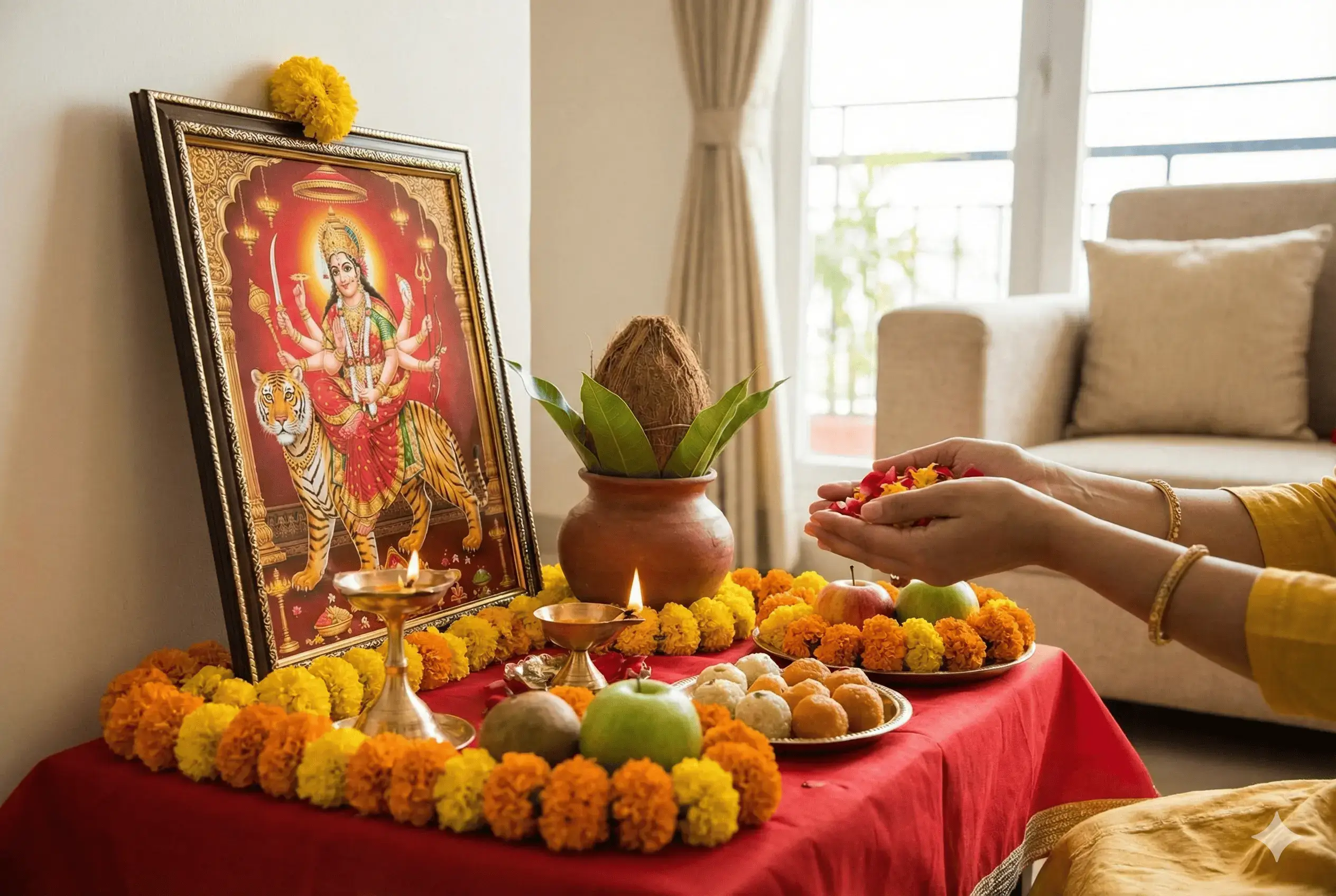
A calm, meaningful guide for busy lives seeking strength, clarity, and inner balance
Why Navratri Puja Is Done
Navratri means “nine sacred nights” dedicated to Maa Durga, the Divine Mother who represents power, protection, wisdom, and inner strength.
In Sanatan Dharma, Navratri is not just a festival. It is a spiritual reset.
During these nine days, we worship the nine forms of Maa Durga (Navadurga) to:
- Remove inner fears and doubts
- Gain strength to face life’s challenges
- Cleanse negative energies
- Balance emotions and thoughts
- Strengthen discipline and focus
- Awaken spiritual awareness
Navratri reminds us that true power is not aggression, but clarity, courage, and compassion.
For many working professionals, Navratri arrives when:
- Mental fatigue is high
- Responsibilities feel heavy
- Emotional balance is disturbed
This puja becomes a quiet anchor in the middle of a fast-moving life.
When to Do Navratri Puja
Navratri is celebrated twice a year, and both are spiritually powerful.
Main Navratri Periods
- Sharad Navratri (Sept–Oct) – Most widely observed
- Chaitra Navratri (March–April) – Spiritual renewal
Ideal Time for Daily Puja
- Morning: 6:00 AM – 8:00 AM
Evening: 7:00 PM – 9:00 PM
Even if you are busy, a short daily puja with devotion is enough. Consistency matters more than duration.
Required Items for Navratri Puja
Navratri Puja traditionally involves multiple symbolic items. Beginners often feel overwhelmed.
Traditional Item List
- Maa Durga photo or idol
- Kalash
- Coconut
- Mango leaves
- Red cloth
- Chunri for Devi
- Rice (Akshat)
- Kumkum, Haldi
- Incense sticks & diya
- Ghee or oil
- Camphor
- Flowers (red preferred)
- Fruits
- Panchamrit
- Navratri grains (for Ghatasthapana)
- Durga Saptashati or simple mantra list
Very Real Situation
After office work, traffic, family duties, and daily stress—managing all this becomes difficult.
This is why many families now choose a…
Navratri Puja Kit – A One-Stop Solution
Our Navratri Puja Kit is designed for:
✔ Working professionals
✔ Nuclear families
✔ First-time Navratri observers
✔ Elderly parents
✔ NRIs seeking authenticity
The kit includes all essential samagri, pre-measured, clean, and ready to use—so you can focus on bhakti, not preparation.
Explore Navratri Puja KitStep-by-Step Navratri Puja Guide
You don’t need deep ritual knowledge. Just sincerity.
Step 1: Clean the Home & Yourself
- Clean the puja area thoroughly
- Take a bath or wash hands and feet
- Wear clean clothes
Clean surroundings invite divine energy.
Step 2: Ghatasthapana (Kalash Sthapana)
(Done on Day 1)
- Place a pot filled with water
- Add mango leaves
- Place coconut on top
- Keep it on a bed of soil with barley seeds
This symbolizes creation, growth, and life energy.
Step 3: Place Maa Durga
- Place Maa Durga’s idol or photo
- Decorate with red cloth and flowers
Red symbolizes shakti (power).
Step 4: Light Diya & Incense
Light the diya daily in the same place.
The flame represents hope, courage, and awareness.
Step 5: Invoke Ganesha
Begin with:
Om Gam Ganapataye Namaha
Meaning: Salutations to the remover of obstacles.
Step 6: Invoke Maa Durga
Fold hands and chant:
“ॐ दुं दुर्गायै नमः“
Om Dum Durgaye Namah
Meaning: I bow to Maa Durga, the protector.
Step 7: Daily Navratri Worship
Each day honors a form of Durga:
- Shailputri
- Brahmacharini
- Chandraghanta
- Kushmanda
- Skandamata
- Katyayani
- Kalaratri
- Mahagauri
- Siddhidatri
You may simply remember the form and offer flowers.
Step 8: Offerings
- Offer flowers
- Fruits
- Panchamrit
- Simple bhog (fruits or fasting food)
Step 9: Chanting / Reading
If time allows:
- Durga Chalisa
- Durga Saptashati (few verses)
If not, even chanting Maa’s name with faith is enough.
Step 10: Aarti
Perform aarti daily.
“Jai Ambe Gauri…”
Step 11: Fasting (Optional)
Fasting is a choice, not compulsion.
You may:
- Fast fully
- Eat fruits
- Eat satvik food
Intent matters more than strictness.
Step 12: Kanya Puja (Ashtami or Navami)
- Worship young girls as Devi
- Offer food and gifts
This reminds us to respect feminine energy.
Step 13: Visarjan (Day 10 – Dashami)
Thank Maa Durga for her presence.
Sprinkle Kalash water in the home.
Important Navratri Mantras + Meanings
1. “Om Dum Durgaye Namah”
Meaning: Salutations to the Divine Mother, the remover of fear.
2. “Ya Devi Sarva Bhuteshu Shakti Rupena Samsthita”
Meaning: The Goddess who resides as strength in all beings.
3. “Sarva Mangala Mangalye”
Meaning: O Mother, you who bring auspiciousness everywhere.
Dos & Don’ts of Navratri Puja
Dos
✔ Maintain cleanliness
✔ Eat satvik food
✔ Chant daily
✔ Control anger
✔ Stay disciplined
✔ Respect women
Don’ts
✘ Avoid alcohol & non-veg
✘ Avoid negative thoughts
✘ Do not skip puja due to laziness
✘ Avoid arguments
✘ Avoid disrespectful behavior
“You manage deadlines, family, finances, and expectations. But who takes care of your inner strength?”
Navratri is not about perfection.
It’s about showing up for yourself—for 15 minutes a day.
This puja gives emotional grounding in a chaotic routine.
Who Can Buy This Navratri Puja Kit
✔ Corporate Employees
✔ Women balancing home & work
✔ Young couples
✔ Parents seeking family harmony
✔ NRIs wanting spiritual connection
✔ First-time puja performers
Want to Observe Navratri Without Stress?
If:
✔ You’re unsure about rituals
✔ You don’t have time for shopping
✔ You fear missing items
✔ You want authenticity without confusion
Our Navratri Puja Kit is created for you.
✔ All essential items
✔ Clean & authentic samagri
✔ Beginner-friendly
✔ Saves time & effort
Just open the kit and start your puja peacefully.
Explore Navratri Puja KitFAQs
Not mandatory.
This guide is beginner-friendly and you can perform it yourself.
Usually 45 minutes to 1.5 hours, depending on whether you do havan.
Yes, absolutely.
Blessings depend on intention, not ownership.
Simple, clean clothes — preferably traditional.
Keep it in the northeast corner for 1–3 days before immersing the water in plants.


